From Childhood Play to Quiet Companions
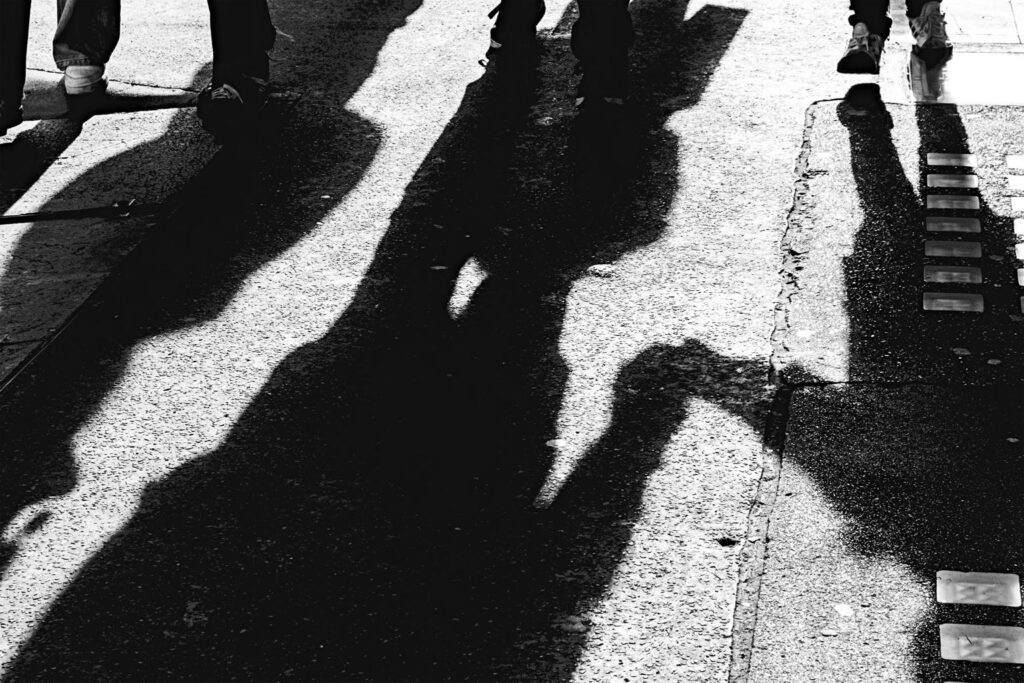
When we were children, shadows were something playful.
We chased them on pavements, stretched them long in the evening sun, turned them into animals on bedroom walls. They were soft, curious, almost magical. They followed us, but they didn’t define us. They were something we could step in and out of without fear.
Somewhere along the way, that changes.
As adults, our “shadows” begin to take on a different meaning. They become the parts of us shaped by what we’ve been through the experiences we carry quietly, the moments that stayed with us longer than we expected, the things we don’t always say out loud.
Our shadows hold:
• The shame we were never meant to carry
• The trauma that altered how safe the world feels
• The parts of us that adapted just to survive
• The versions of us that had to become stronger, quieter, sharper
And unlike childhood shadows, these ones don’t always feel playful.
They can feel heavy.
Unwanted.
Like something we should hide.
But here’s the truth we don’t say enough:
Our shadows are not evidence of something wrong with us.
They are evidence that something happened to us.
There is a difference.
The Parts We Learned to Hide
In many of the spaces we work in especially where there is trauma people learn early that some parts of them are “too much.”
Too emotional.
Too angry.
Too withdrawn.
Too sensitive.
So those parts go into the shadows.
Not because they are bad.
But because, at some point, it felt safer to put them there.
And over time, we can begin to believe that those shadowed parts are something to be ashamed of.
And if I’m honest, I recognise this in myself too. There are parts of me I have kept in the shadows not because they didn’t matter, but because at some point I learned they were safer hidden. Safer not spoken about. Safer not seen. I think many of us carry a shadow side like that not because it should be hidden, but because we were never given permission to hold it differently. We learned it was something to manage quietly, something to contain, something not to celebrate.
But often, those very parts are:
• The boundaries we didn’t have before
• The instincts that kept us safe
• The awareness that now protects us
• The depth that allows us to sit with others in their pain
Wearing Our Stripes
Think about animals like tigers or zebras.
Their stripes are not something they hide.
They are part of their identity.
Part of their protection.
Part of how they move through the world.
What if our “shadows” were more like that?
Not something to erase.
But something to understand.
Something that tells a story about where we’ve been and how we survived it.
This doesn’t mean celebrating pain.
It means recognising the strength it took to carry it.
In Our Work, In Ourselves, In Each Other
In the work we do, we see this every day.
People don’t walk into services as blank pages.
They arrive with shadows shaped by experiences, systems, relationships, and survival.
And so do we.
As practitioners, leaders, colleagues we bring our own shadows into the room:
• The parts of us that over-function
• The parts that struggle to rest
• The parts that carry responsibility a little too heavily
• The parts that feel deeply, even when we don’t show it
The risk is not that we have shadows.
The risk is when we pretend, we don’t.
Because when we deny our own shadows:
• We can become less compassionate
• More reactive
• Less aware of our limits
• More likely to burn out
But when we acknowledge them:
• We create space in ourselves and for others
• We lead with more honesty
• We recognise when something is being activated
• We build safer, more human environments
Turning Towards the Shadow
There is something powerful in gently turning towards the parts of ourselves we once avoided.
Not forcing.
Not exposing everything.
Just noticing.
What part of me shows up when I feel overwhelmed?
What part of me is trying to protect me right now?
What story sits underneath this reaction?
This is not about fixing ourselves.
It’s about understanding ourselves.
A Different Relationship
What if our shadows didn’t have to be something we carried in silence?
What if they could be something we:
• Speak about safely
• Hold with compassion
• Recognise in others without judgement
Not everything needs to be shared publicly.
But everything deserves to be held without shame.
Because the truth is:
We are not just the parts of us that feel easy to show.
We are also the parts that learned to survive in harder spaces.
And those parts deserve a place too.
Next time you notice your shadow whether it’s on the pavement beside you, or in the quieter parts of yourself pause for a moment.
Instead of stepping away from it, try standing with it.
Not as something to fear.
Not as something to hide.
But as something that has walked with you, even when things were hard.
And maybe, slowly, gently as something you can begin to carry with a little more understanding,
and a little less shame.
Stay connected
Sign up for our newsletter. New articles, resources, and insights sent with care. No spam, unsubscribe anytime.