University of Roehampton
We joined the University of Roehampton for a 20 minute interview on voice, inclusion, and ethical employment relations across borders. The conversation explored relationships, fairness, and legitimacy at work, with a focus on recruitment, safe practice, and wellbeing.

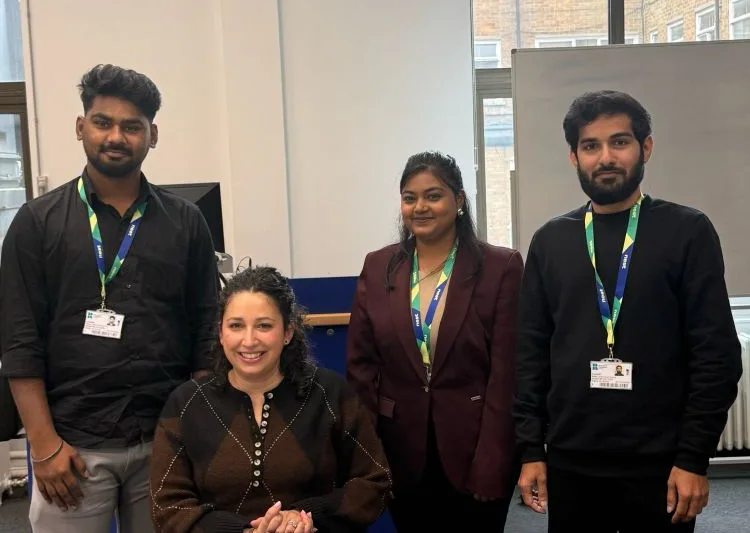
Ethical employment relations across borders
A 20 minute recorded interview on voice, inclusion, and ethical employment relations across borders. The discussion centred on relationships, fairness, and legitimacy at work, and on what it takes for people to speak up and be heard when employment crosses national and cultural lines.
We talked about recruitment as the first place where safety and inclusion are either built or lost. The conversation also covered safe practice, wellbeing, and the everyday decisions that decide whether a person feels valued, protected, and able to raise a concern without fear.
A large part of the talk turned on power. Power sits with the person who holds the job, the contract, and the reference. A trauma-informed process names that gap instead of hiding it, and gives the person with less power a safe way to speak. We also asked a harder question: what is the price of not being inclusive? The answer is not only moral. It is the cost of lost talent, silence, and harm that nobody records.
A trauma-informed lens on employment
A trauma-informed lens asks what happened to a person, not what is wrong with them. Applied to employment, it means recruitment, induction, management, and exit are designed with safety and dignity in mind. It also means leaders notice where power sits, and where a process could silence the people it is meant to protect.
Voice, inclusion, and ethical practice are not separate projects. They depend on clear expectations, consistent behaviour, and a fair route to raise a concern. When those things hold, people stay well, teams keep their knowledge, and the organisation keeps its integrity.
What the conversation covered
- ● Voice, inclusion, and ethical employment relations across borders, and what changes when work crosses countries and cultures
- ● Relationships, fairness, and legitimacy, and why a fair process matters as much as a fair outcome
- ● Recruitment as the first point of safety and inclusion, from the language of the advert to the first day
- ● Safe practice and wellbeing for staff and for the people they serve, without treating either as an extra
- ● Trauma-informed approaches to people and employment relations, grounded in dignity and choice
- ● Power imbalance between employer and worker, and how a process can give the person with less power a safe way to speak
What trauma-informed looks like on the ground
Trauma-informed is not a policy document. It shows in how a process is built. On exit interviews, we spoke about giving people real choice in how they complete it. They can write it down, talk to someone other than their manager, or speak to a neutral person. Choice is the point. If the only route is through the person they are leaving, the review will be polite, not honest.
Probation came up in the same way. A probation period is usually a test of the worker. We spoke about making it two-way. The staff member also gets to judge the role, the support, and the culture, and to raise a concern without penalty. That is how the period becomes about the person and not only about the employer. Both examples come back to power, and to giving the person with less of it a fair way to be heard.
What the session covered
Want to explore how we can support your team?
Every organisation is different. Tell us a little about what you're working on and we'll recommend the right approach with no obligation, just honest guidance.