Grieving the People We’ve Lost
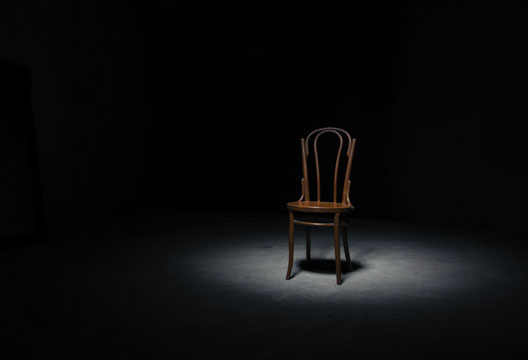
Grieving the People We’ve Lost — Including the Ones We Used to Be
People often think grief happens in one moment — when someone dies. But grief rarely stays in one lane. It spills into our days, our bodies, our work, our relationships, and even how we show up for others. Some griefs hit suddenly; others we carry quietly for years. Some arrive long before any death. And some come from losing a version of ourselves we thought we’d always be.
It’s all grief — just wearing different clothes.
Grieving someone long before they die
There is a very specific ache in grieving someone who is still alive — someone who hasn’t died, but who is no longer who they were to you. I’ve lived that too. The slow losing. The tiny goodbyes. The moments where the person in front of you feels familiar and distant at the same time, like you’re physically together but emotionally holding the outline of who they used to be.
And it’s not only family.
It’s relationships that break before you’re ready.
It’s friendships that quietly dissolve.
It’s the person who once felt like home becoming a stranger in slow motion.
But with family, that grief takes on another shape — because there’s no clean ending, no clear point where you can say, “This is where the loss began.” You grieve the relationship you never had, the bond that never formed, the version of them they could never be. You grieve while they’re alive, while you’re still expected to show up, to love, to function.
And when the death finally comes, it brings a strange kind of emptiness.
Because the grief started years before the final moment.
You’ve already cried the tears, already faced the heartbreak, already mourned the possibilities that never came true. The world expects you to fall apart at the news — but the truth is, the deepest part of you broke long before the funeral.
This kind of grief is lonely.
It doesn’t come with rituals or casseroles or compassionate leave.
It comes quietly, in layers, in ways that even you struggle to articulate.
And yes, this grief follows you into work.
Some days you turn up steady and composed.
Other days your mind drifts to a version of someone you loved, or a version of yourself you had to lose along the way. You think you’ve “dealt with it,” only to find the tenderness still lives inside your body.
Trauma doesn’t wait for a convenient moment.
Grief doesn’t ask permission to enter the room.
Both come with us — into our work, our relationships, our breath — until we’re ready to meet them with honesty.
Grieving an unexpected loss
Then there’s the grief that arrives without warning — a phone call, a moment, a sentence that rewrites your entire emotional landscape.
I’ve been there too. The shock sits in your chest, the world feels slightly tilted, and your nervous system moves into survival mode. And yet life doesn’t pause. You’re still expected to turn up to work, respond to emails, smile politely, make decisions, cook dinner, pay bills, care for your small humans, hold other people’s emotions, and keep the whole world spinning — even when yours has just cracked open.
Walking into work the next day, you might look absolutely fine, but inside everything feels unfamiliar. Your body is trying to protect you, and your mind is trying to catch up with what has happened. Colleagues don’t see the storm, but you feel it — in your breath, your patience, your concentration, your capacity.
Grief like that leaves fingerprints.
It shows up in the moments we’re quieter than usual, more tired, quicker to tear up, or more sensitive without knowing why.
This is why I always remind people at work:
you never know what’s sitting quietly inside someone else
Grieving the person we once were
One of the griefs I rarely spoke about for years was grieving my old self — the version of me that felt freer, more spontaneous, less weighed down by responsibility, trauma, and the emotional labour of work and life. The version of me who didn’t have to grow up so quickly. Who didn’t have to carry so much.
There was a time when I was genuinely more carefree.
There was a lighter version of me — the one who could rest without guilt; who didn’t rehearse every possible outcome; who wasn’t always scanning the environment; who hadn’t yet been shaped, hardened, or humbled by the things I’ve had to survive.
And sometimes I catch glimpses of her.
In the way I laugh without thinking.
In a moment where I forget to worry.
In the softness that appears only around people who make me feel completely safe.
And the grief hits unexpectedly:
I miss her.
But I also understand why she changed.
The things we live through — the heartbreaks, the losses, the parenting, the responsibility, the trauma, the disappointments, the survival — they carve into us. They reshape our nervous system. They teach us caution. They protect us, but they also take things from us.
Sometimes we mourn not only who we were, but who we could have been if life had been kinder.
And then there’s a different layer of grief — the strange feeling of having to adjust to the “new self,” like waking up in a body that doesn’t quite feel like yours yet.
A body that’s more tired.
A heart that’s more guarded.
A mind that is always a few steps ahead, planning, preparing, anticipating.
It can feel disorienting, like you’re trying to settle into a version of yourself you never chose.
Almost like wearing clothes that don’t quite fit, but you have to learn to move in them anyway.
This grief shows up in my work too — in the days when I’m exhausted more quickly, or when compassion comes easily but it takes longer to refill my own cup afterwards. Grief alters our thresholds, our energy, our sensitivity, and our resilience in ways others may never see.
And yet… grieving our old selves is also a kind of honoring.
It’s acknowledging the journey.
It’s recognizing the cost of becoming who we are now.
It’s understanding that we didn’t just change — we adapted, we survived, we kept going.
And sometimes, that’s the most tender kind of grief of all.
Grieving the life you thought you’d have
Trauma has a way of reshaping everything — timelines, identities, choices, and even the way you imagine the future.
Sometimes we grieve the life we were meant to live before something changed the entire map.
A different childhood. A different health. A different relationship. A different sense of safety.
Many people carry these griefs silently.
They grieve the imaginary life they lost… a life no one else even knew existed.
There is no “big grief” or “small grief”
I’ve worked long enough in trauma-focused environments to know this:
grief does not follow a hierarchy.
People often say “it wasn’t that bad” or “others have it worse,” but comparison steals compassion. Every loss, every trauma, affects us according to its meaning and its impact — not its size.
Some griefs completely rearrange us.
Some shift us in quieter, slower ways.
But all grief leaves a mark.
How grief shows up as trauma
- Grief is a trauma in the body.
- It reshapes how we think, feel and relate. It can show up as:
- difficulty concentrating at work
- sensitivity to comments or tone
- emotional numbness
- physical exhaustion
- overfunctioning or perfectionism
- irritability or withdrawal
- fear of new losses
- carrying everyone else’s emotions to avoid our own
- a deep sense of “not being myself”
It’s not personal failure — it’s the nervous system doing its best to protect us.
Grief in the workplace — the invisible companion
I’ve worked on days when I felt strong and grounded, and I’ve worked on days when I felt hollow.
I’ve been the person showing up with a full to-do list while carrying a quiet heartbreak in my bag.
I’ve been the manager holding space for others while grieving something no one knew about.
And many of us do this.
This is why trauma-informed workplaces matter — places where emotional reality is not treated as inconvenience, but as part of being human.
We don’t “move on” — we grow around it
I’m learning that we never fully return to the person we were before grief. We grow around loss the way trees grow around wire — reshaped, but still living. Still reaching. Still becoming.
We grieve because we loved.
We grieve because we changed.
We grieve because a part of us mattered.
And slowly, gently, we learn to carry the grief without letting it carry us.